Do Skin-Brightening Supplements Really Work for Dark Spots?
October 19, 2026
By: nadia Ahmad
In Malaysia, regular sun exposure and heat can make dark spots and uneven skin tone harder to manage. This is one reason skin brightening supplements have become part of the conversation around pigmentation and everyday skin care.
One ingredient you may often see is glutathione for skin, especially in supplements marketed for a brighter-looking complexion. However, the effects can vary, and taking a supplement is not the same as addressing dark spots through aesthetic treatments.
Learning if a whitening supplement for the skin can help with pigmentation concerns can guide you towards making an informed decision about your skin care routine.
Do Skin Brightening Supplements Work?
Skin brightening supplements may support a brighter-looking complexion, but the changes are usually subtle and gradual. Results can also vary depending on the ingredients, dosage, skin concerns, and how consistently the supplement is taken.
It is important to remember that a skin supplement should not replace daily sunscreen or professional treatment for pigmentation concerns. Consistent use of SPF can help prevent new dark spots and reduce the risk of existing pigmentation becoming darker, while aesthetic treatments may help address concerns based on individual needs.
Can Supplements Get Rid of Dark Spots?
Supplements may support an even-looking skin tone, but they do not erase dark spots on their own. Products containing tyrosinase inhibitors may play a role in pigmentation care.
Meanwhile, targeted aesthetic treatments, such as Pico laser and chemical peels, may help address existing dark spots, depending on the type of pigmentation. A doctor’s assessment can help determine if skin brightening supplements or aesthetic treatments may be considered based on individual skin concerns and overall skin condition.
Do Skin Supplements Actually Brighten Skin?
Skin brightening supplements may help with pigmentation in some people, but the response can vary. Research on oral supplements is still mixed, so they should be used alongside sunscreen, topical care, or aesthetic treatments where appropriate.
Ingredient
What the evidence suggests
Glutathione for skin
Some studies report changes in melanin levels after oral use, but findings vary, and the duration of these effects remains unclear.
Vitamin C for skin
Vitamin C has antioxidant functions and plays a role in melanin production, but evidence for oral supplementation and skin brightening remains limited.
Fernblock (Polypodium leucotomos)
Research mainly links this fern extract with oral photoprotection and its use alongside other approaches for pigmentation concerns.
Rosemary Leaf
Rosemary contains antioxidant compounds, but there is limited evidence that oral rosemary supplements can reduce skin pigmentation.
Grape Seed Extract
A small study in women with melasma found that oral grape seed extract was linked to reduced hyperpigmentation, although the study had a limited number of participants.
The evidence varies depending on the ingredient and how it is used. Oral supplements for the skin may play a supporting role in managing pigmentation, but they should not be treated as a standalone approach.
Does Glutathione Work for Skin Whitening?
Oral use of glutathione for skin may have a lightening effect in some people, although results can vary. It may also influence melanin production, which can affect how pigmentation appears on the skin.
However, the way the skin responds to a whitening supplement can differ from person to person, and changes may not be noticeable for everyone.
Glutathione vs Vitamin C for Skin: How They Differ
Understanding how glutathione and vitamin C differ can help explain why they are often used together in skin brightening supplements. They work through different pathways, so one does not simply replace the other.
Glutathione
Glutathione for skin is commonly included in a whitening supplement because of its role in pigmentation pathways.
It may act as a tyrosinase inhibitor, which means it can affect an enzyme involved in melanin formation.
Some skin whitening pills contain glutathione as a main active ingredient to support changes in skin pigmentation.
Vitamin C
Vitamin C for skin is associated with antioxidant activity and may also play a role in managing pigmentation.
The ingredient can help protect cells from oxidative stress, which may affect processes linked to pigmentation.
It is often combined with glutathione rather than used for the same purpose.
The effects of either ingredient can vary depending on the dose, formulation, and individual response.
Some supplements are marketed as an oral sunscreen, but they should not replace topical SPF and other sun-protection measures.
Brightening From Within vs Topical: What’s the Difference?
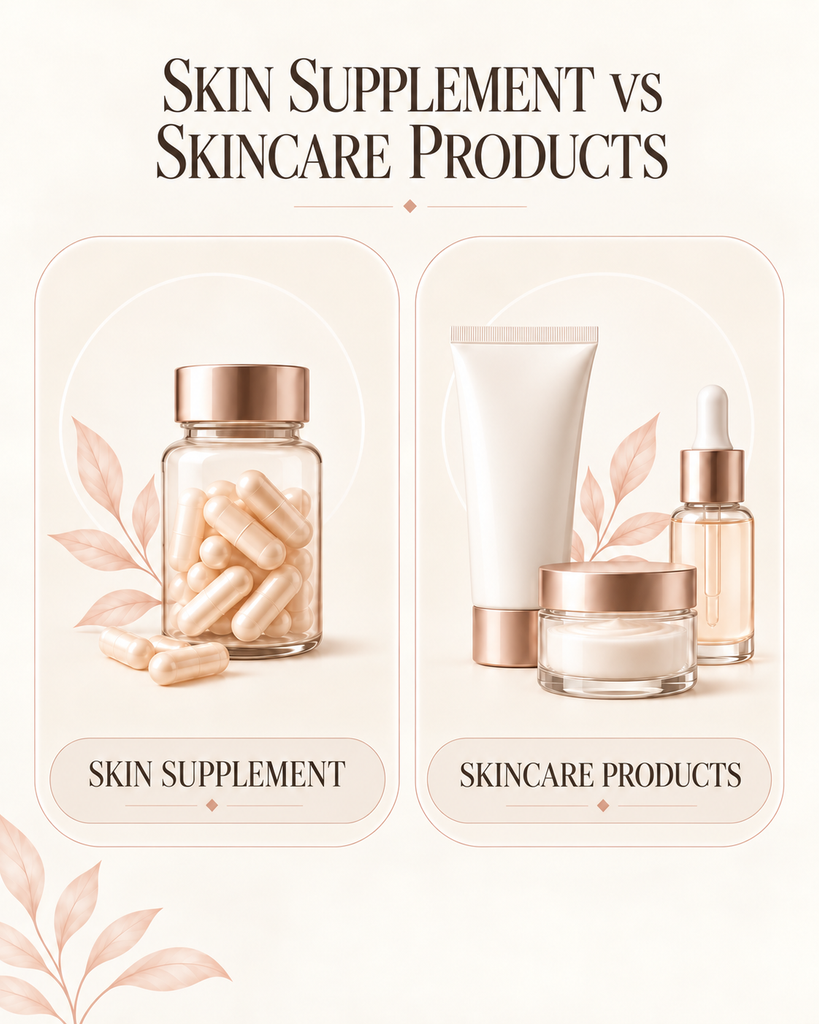
Brightening from within vs topical refers to two separate approaches to managing pigmentation, based on how the products are used. Oral and topical products work in different ways and may be used together as part of a broader skin care routine.
Brightening From Within
Skin brightening supplements are taken orally and work through processes inside the body rather than acting directly on the skin surface.
An oral skin supplement may contain ingredients linked to antioxidant activity or pigmentation support.
Some skin whitening pills are formulated with glutathione, vitamin C, or plant extracts.
Results can vary depending on the formulation, dosage, and individual response.
Topical
Topical products are applied directly to the skin and are often used to target visible pigmentation.
They may contain ingredients that affect melanin formation or support skin cell turnover.
Products such as serums, creams, and exfoliating treatments work directly on the areas where they are applied.
Daily sunscreen is important, as UV exposure can contribute to increased pigmentation.
Both approaches can be used as part of a skin care routine. The right combination depends on the concern being addressed and how the skin responds.
How Long Do Skin Brightening Supplements Take to Work?
A supplement for skin brightening may take several weeks to a few months before any visible changes appear, depending on consistent use, formulation, and individual response.
There is no guaranteed timeline or result, and products marketed as an oral sunscreen should not replace topical SPF and regular sun protection.
Why Supplements Do Not Replace Sunscreen
Skin brightening supplements and products marketed as an oral sunscreen may support pigmentation care, but they do not replace daily SPF. Even oral photoprotection ingredients such as Fernblock are intended to complement, rather than substitute, topical sun protection.
A whitening supplement or vitamin c for skin may be used as part of a broader routine, but sunscreen still helps limit UV-related pigmentation. Clinic treatments may also be considered for existing concerns, depending on the type and cause of pigmentation.
What Happens at a Pigmentation Assessment?
You do not need to decide on supplements or aesthetic treatments on your own when dealing with pigmentation.
During a pigmentation assessment, the doctor may consider factors such as:
Your main skin concern
Skin tone and sensitivity
Type, depth, and location of pigmentation
How long the pigmentation has been present
Sun exposure and sunscreen use
Current skin care routine
Previous aesthetic treatments
Any skin whitening pills or other supplements you are taking
Your treatment goals
These details can help the doctor decide if skin brightening supplements, topical products, aesthetic treatments, or a combination may be considered.
If you are considering taking products containing glutathione in Malaysia, an assessment at Dr Nazelia Clinic allows the doctor to review your pigmentation concerns and discuss which approach may be suitable for your skin.
The aim is not to choose a skin supplement or treatment based on one concern alone. A pigmentation assessment helps identify the type of pigmentation and plan the next steps based on your skin condition.
Frequently Asked Questions About Skin Whitening Supplement in Malaysia
Do skin brightening supplements really work?
Skin brightening supplements may help address pigmentation in some people, but results can be subtle and vary between individuals. They should not be expected to produce the same outcome for everyone. Factors such as formulation, dosage, and consistency can also affect how someone responds to the supplement.
Does glutathione lighten skin permanently?
There is not enough evidence to show that glutathione for skin produces permanent changes in skin tone. Studies have reported changes in melanin levels, but the duration of these effects remains unclear.
Are skin whitening pills safe?
Skin whitening pills are not automatically safe, as their safety depends on the ingredients, dose, formulation, and individual health factors. Before taking a whitening supplement, check its contents and discuss any concerns with a healthcare professional.
Can supplements remove dark spots?
A skin supplement may support pigmentation care, but it is unlikely to remove existing dark spots on its own. Evidence for improvements in dark spots mainly relates to topical use of Vitamin C for skin rather than oral supplementation, and targeted treatments may be considered for existing concerns.
Is oral sunscreen enough on its own?
Supplements marketed as an oral sunscreen may provide additional photoprotection, but they should still be used alongside topical SPF. Learning why supplements do not replace sunscreen can help clarify the role each option plays in protecting the skin from UV exposure.
Speak to a Doctor Before Adding Supplements to Your Routine
Skin brightening supplements can be part of a skin care routine, but it helps to keep expectations realistic and not rely on supplements alone. Changes in skin appearance can also depend on sun exposure, daily habits, and the type of pigmentation involved.
Interest in glutathione for skin has grown, but product claims do not always reflect what clinical studies have found. If you are looking at supplements containing glutathione in Malaysia, checking the ingredient list and dosage can help you understand what you are actually taking.
It can also be useful to look at your skin concerns before deciding what to add to your routine. A skin assessment at Dr Nazelia Clinic can help review your concerns and discuss suitable options before you decide to add a skin brightening supplement to your routine.
In this Article
Ready to start your skin journey?
Speak with our aesthetic doctors across four clinic locations