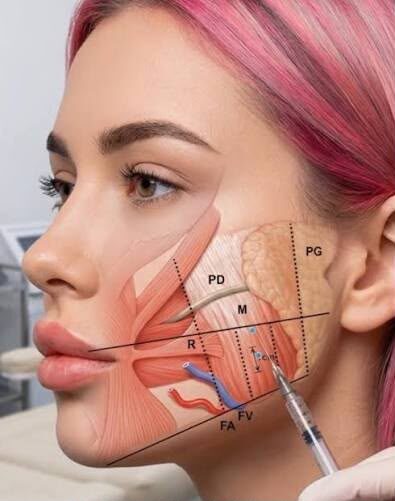
Is HIFU Right for Your Jawline, or Do You Actually Need a Facelift?
October 1, 2026
By: nadia Ahmad
Noticing your jawline looks less defined is often a sign that the skin around the lower face has started to lose firmness. At this stage, some people begin comparing a non-surgical face lift with surgical options such as a facelift.
HIFU for facial lifting is commonly considered for mild skin laxity and changes in facial firmness, with results developing gradually. It may also be used for jawline contouring to address mild sagging. In simple terms, HIFU may be considered for selected cases of mild to moderate skin laxity, while facelift surgery can address more substantial sagging by repositioning deeper facial tissues. They are not equivalent treatments.
The right approach depends on the degree of skin laxity, facial structure, treatment goals, and individual assessment. That is why consultation is important before deciding on any treatment.
Is HIFU or a Facelift Better for a Sagging Jawline?
HIFU may suit mild to moderate skin laxity, while a facelift may be considered when sagging is heavier and involves deeper tissues. As one of the non-invasive skin tightening treatments, HIFU offers a non-surgical face lift approach, but it does not reposition tissue in the same way as surgery.
HIFU for jawline tightening
The treatment works by supporting collagen production in deeper skin layers, which can gradually firm loose skin along the lower face. It may help improve mild sagging around the jawline and cheeks, but the effect is gradual tightening rather than the repositioning associated with a surgical facelift.
Skin Laxity vs Volume Loss: What Is the Difference?
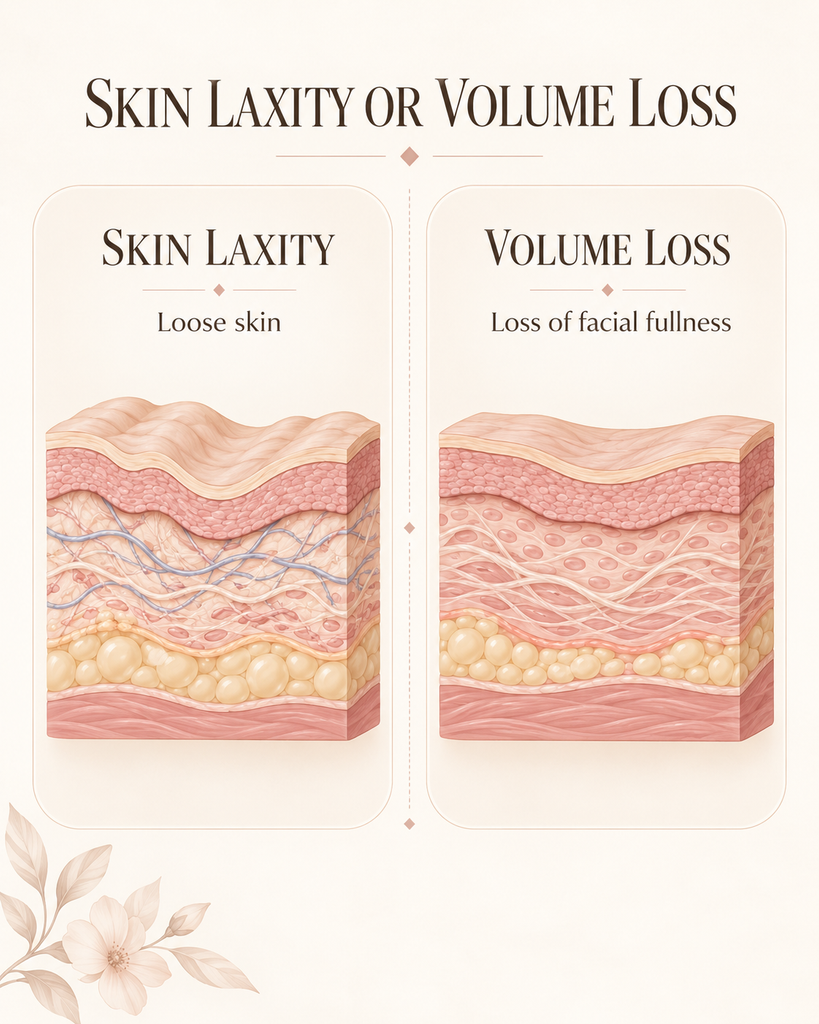
Understanding skin laxity vs volume loss matters because both can change the shape of the face, but they do not happen for the same reason. Both can develop as part of natural ageing, following significant weight loss, or from a gradual decline in collagen over time.
Skin Laxity
It happens when the skin gradually loses firmness and elasticity, often as collagen and elastin levels decline with age. HIFU for skin tightening may be considered when laxity is mild to moderate.
Often appears as softening around the jawline, cheeks, or neck
Can make facial contours look less defined
May be linked to ageing, pollution, sun exposure, smoking, and other lifestyle factors
Involves changes in skin firmness rather than a loss of facial fullness
Volume Loss
Volume loss happens when the face gradually loses its natural fullness as fat pads thin and shift downward, while the facial skeleton loses density over time. Collagen and hyaluronic acid in the deeper layers of the skin also decline, reducing the support that helps maintain facial fullness.
Often appears as hollow or sunken areas
Can reduce fullness in the cheeks and temples
May make fine lines and folds appear more noticeable
Involves a loss of underlying support rather than loose skin alone
Face lifting treatments that focus on tightening do not replace volume that has been lost, so one method may not address every facial change.
An assessment with us can help identify which changes relate to looseness and which relate to volume before a non-surgical face lift treatment is considered.
How Do You Know If Your Double Chin Is Fat or Loose Skin?
It can be difficult to tell from appearance alone if fullness beneath the chin is mainly related to submental fat, skin laxity, or a combination of factors. A clinical assessment can look at skin quality, tissue distribution, facial structure, and the neck-jawline relationship.
Knowing which one is contributing to the appearance can help guide the choice of non-invasive skin tightening for the face, although these signs should only be used as general clues rather than a diagnosis.
Possible Cause
What You May Notice
Approach That May Be Considered
Fat beneath the chin
A soft, pinchable layer beneath the chin
Treatment may focus on the fat itself before considering jawline contouring
Loose skin
Thinner skin with little to no soft padding that may hang or sag
HIFU for facial lifting may be considered when the concern involves mild to moderate looseness
Is HIFU Suitable for a Skinny Face?
HIFU may not suit every person with a thinner face, especially when there is little facial fat or existing hollow areas. Those with thinner facial features may need to consider other non-invasive skin tightening treatments. Focused ultrasound can affect tissue beneath the skin, so facial volume should be assessed before treatment.
HIFU for skin tightening may be considered when the main concern is loose skin rather than lost facial volume. A non-surgical face lift approach does not restore lost volume, so thin or hollow areas may need to be assessed separately.
If you are considering HIFU treatment in Kuala Lumpur, contact us to arrange an assessment of your skin condition, facial volume, and treatment area before deciding on the next step.
Which Areas Can HIFU Treat?
HIFU can be used on areas of the face, neck, and upper chest to support skin tightening and contouring. As a non-surgical face lift, treatment areas are selected based on skin condition, facial structure, and individual assessment.
Full Face: HIFU for skin tightening may be used across selected facial areas to support firmness and address changes in skin laxity.
Neck: It may be used on the neck to improve the appearance of loose skin.
Lower Face and Jawline: The treatment may be applied along the lower face and jawline to support definition and facial contour.
Double Chin: HIFU for double chin may be considered to help reduce the appearance of fullness under the chin.
Brow and Forehead: It may be used on areas around the brow and forehead where laxity is present in the upper face.
Décolletage (Upper Chest): HIFU may be considered for the décolletage to address mild laxity and skin texture.
HIFU Areas to Avoid
HIFU areas to avoid generally include the eyes, lips, prominent bony areas of the face or body, and areas on or near lymph nodes.
If you are contemplating HIFU treatment in Alor Setar, an assessment can help identify which areas may be suitable for treatment and which should be avoided.
HIFU for Double Chin: Does It Work?
HIFU for double chin may help improve the appearance of fullness under the chin, particularly when skin laxity contributes to the concern. As a face lifting treatment, it works beneath the skin to stimulate collagen, with changes developing gradually and varying from person to person.
Focused ultrasound energy reaches targeted tissue layers, including the SMAS layer, where controlled heat stimulates collagen production.
As collagen develops over time, the skin beneath the chin may appear firmer.
Jawline contouring with HIFU may also help address loose skin around the neck and jawline.
If fat contributes to the fullness under the chin, a non-surgical face lift treatment such as HIFU may not address the entire concern on its own.
What Happens at a HIFU Suitability Check?
An assessment can help determine if HIFU for facial lifting may be suitable for you.
During a facial assessment, the treatment plan may be based on factors such as:
The degree of skin laxity
Facial shape and structure
Facial volume and hollow areas
The amount and location of fat beneath the chin
Skin thickness and condition
Previous facial treatments
Areas of the face you want to address
Your treatment goals
Relevant medical history
These details can help determine if a non-surgical face lift or other non-invasive skin tightening treatments may be suitable for your concerns.
For those considering HIFU treatment in Shah Alam, a suitability assessment at Dr Nazelia Clinic allows the doctor to review the treatment area and determine if a face lifting treatment may be suitable for your skin and facial structure.
Frequently Asked Questions About HIFU for Facial Lifting
Does HIFU tighten the jawline?
HIFU for skin tightening may help firm mild to moderate skin laxity around the lower face by stimulating collagen production. It may also support jawline contouring, although the degree of change varies between individuals.
Can HIFU get rid of double chin?
HIFU for double chin may help improve the appearance of fullness when loose skin contributes to the concern. If the fullness is mainly caused by fat, HIFU alone may not address the entire area.
How do I know if my double chin is loose skin or fat?
Fat beneath the chin usually feels soft and pinchable, while loose skin tends to feel thinner and may hang or sag. Identifying the main cause can help determine which face lifting treatment or other approach may be considered.
Does HIFU really lift your face?
HIFU for facial lifting may gradually support firmer skin in cases of mild to moderate laxity by stimulating collagen. As a non-surgical face lift, it does not provide the same degree of tissue lifting as facelift surgery, and results vary between individuals.
When might HIFU not be enough for jawline sagging?
HIFU may have limitations when jawline sagging is more pronounced or involves deeper facial tissues. Unlike facelift surgery, HIFU does not reposition facial tissues, so it may not provide the degree of structural change needed for more substantial laxity or jowling.
Talk to a Doctor About Changes Around Your Jawline
Understanding what is contributing to changes in the face can help when considering a non-surgical face lift or surgical options. HIFU for facial lifting is a non-invasive approach for addressing laxity, with suitability depending on your skin condition, facial structure, and treatment goals.
If the concern is around the jawline or under the chin, HIFU for double chin and other non-invasive skin tightening treatments may be considered to support definition and manage fullness in these areas.
Dr Nazelia Clinic assesses your skin, facial structure, and treatment area before suggesting an approach. You can contact us to discuss your concerns and understand which option may be suitable for you. For those considering HIFU treatment in Kuala Lumpur, the clinic has locations in TTDI and Wangsa Melawati, with other branches in Shah Alam and Alor Setar.
In this Article
Ready to start your skin journey?
Speak with our aesthetic doctors across four clinic locations