Acne marks and dull skin can happen for different reasons, so the right approach depends on what is causing the concern. Chemical peels and laser treatments work in different ways, with each procedure targeting specific changes in the skin.
A chemical peel for hyperpigmentation may be considered when surface discolouration and uneven texture are part of the concern. Laser-based options may also be used as an uneven skin tone treatment, depending on the type and depth of pigmentation involved.
Understanding how each option works can help you discuss a suitable approach with a qualified practitioner.
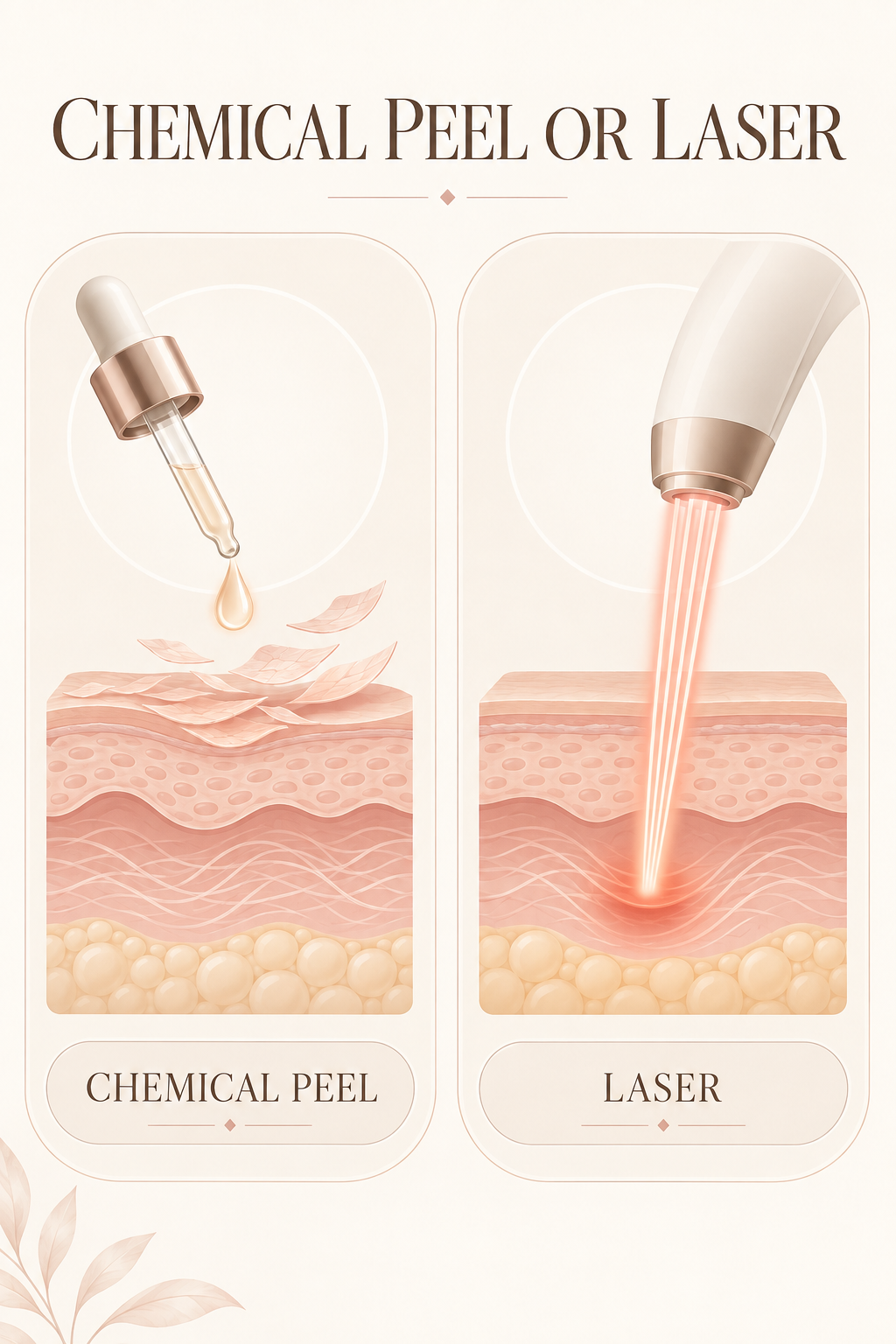
Chemical Peel or Laser: How Do They Differ?
There is no single option that suits every skin concern, as chemical peels and laser treatments work in different ways. The choice usually depends on the type of acne marks, pigmentation, dullness, skin texture, and how your skin responds to treatment.
Chemical Peel
A chemical peel is a face peeling treatment that exfoliates the outer layers of the skin to support gradual renewal.
- A salicylic acid or glycolic acid chemical peel helps trigger the gradual shedding of the outer layers of the skin and supports skin cell turnover.
- It may be used for dull skin, rough texture, congestion, and uneven skin tone.
- It can also help improve the appearance of post-inflammatory hyperpigmentation over time.
- TCA chemical peels may be used when suitable for the skin concern.
- Peel strength and ingredients can be adjusted based on the skin condition.
Laser Treatment
A laser treatment for the face uses light energy to target concerns at different depths of the skin.
- Pico laser may be discussed for selected pigmentation concerns and post-acne marks, while CO2 and Erbium lasers may help with resurfacing, texture, and selected acne scars.
- Laser settings can be adjusted based on the skin concern being treated.
- Selective photothermolysis allows laser energy to target specific pigments while limiting its effect on the surrounding skin.
- Certain laser treatments may be more suitable for specific concerns, depending on the doctor’s assessment.
- Suitability also depends on factors such as skin type and treatment area.
Understanding the difference can help explain when a laser or chemical peel for hyperpigmentation may be used. A consultation with our doctor can help determine which procedure may suit your skin goals.
Is a Chemical Peel or Laser Better for Acne Marks?
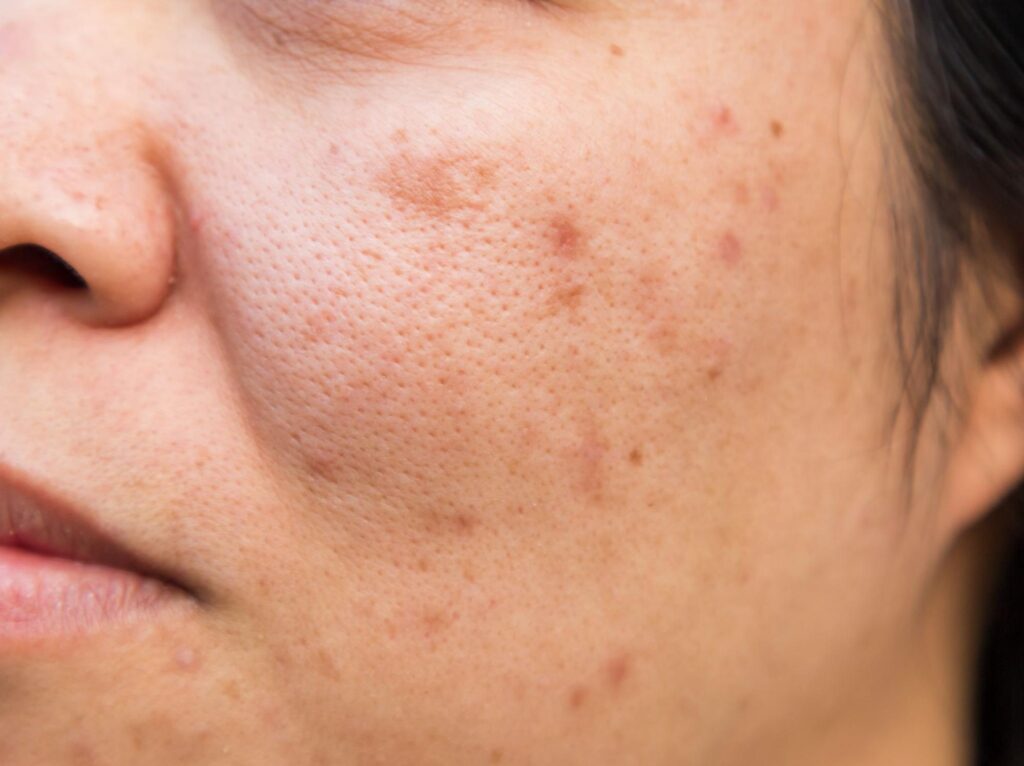
Flat post-acne pigmentation, including post-inflammatory hyperpigmentation, is different from an acne scar. Chemical peels may be considered for some surface pigmentation by supporting epidermal turnover.
Laser treatment may be discussed based on the pigment type, pigment depth, skin tone, and the type of laser selected after assessment.
When considering a chemical peel or laser for pigmentation, the choice should be based on the doctor’s assessment rather than assuming one approach is suitable for every case.
Chemical Peel or Laser: Which One Works for Dull Skin?
Dull-looking skin is often linked to dead skin cell buildup and slower skin renewal.
A chemical peel for dull skin may be considered depending on the cause of dullness and the findings from a skin assessment, while laser treatment may be used when concerns such as pigmentation or uneven texture are also present.
How Do You Choose Between a Chemical Peel and Laser?
The choice depends on the skin concern, its depth, skin type, and expected recovery period. A skin assessment can also help determine which approach may suit the area being treated.
Consider the Skin Concern
A chemical peel for hyperpigmentation or chemical peel for dull skin may be considered for surface discolouration. A laser treatment for the face may be considered for concerns such as pigmentation, acne marks, scars, and skin texture, depending on the laser used.
Look at How Deep the Concern Is
A TCA chemical peel can work at varying depths depending on its concentration and how it is applied. Laser treatments can also work at varying depths, with options such as CO2, Erbium, and Pico lasers used for different skin concerns.
Think About Recovery
Peel depth and downtime depend on the type and strength of the chemical solution used. Recovery after a laser procedure can also vary depending on the type of laser, its settings, and the area treated.
Look at the Type of Pigmentation
For an uneven skin tone treatment, a chemical peel may be considered when discolouration is closer to the skin surface. Laser treatment may be considered when pigment requires a different treatment approach based on its type and depth.
Factor in Your Skin Type
Skin tone, sensitivity, and the condition of the skin can affect how a face peeling treatment such as a chemical peel is selected. These factors can also guide the type of laser and settings used during treatment.
Is a Chemical Peel Suitable for Dark Skin Tone?
A chemical peel for dark skin tone may be suitable in some cases, but deeper skin tones can be more prone to post-inflammatory hyperpigmentation after treatment. For this reason, the type and depth of the peel should be selected carefully based on the skin assessment.
When uneven pigmentation is part of the concern, a chemical peel for hyperpigmentation may also be included in the treatment plan. The approach should be planned with caution, as skin response can vary from person to person.
Is Carbon Peel and CO2 Laser the Same?
No. A carbon peel facial uses a carbon-based lotion and laser energy to exfoliate the skin by targeting carbon particles, helping lift surface oil, contaminants, and dead skin. It may be considered a type of face peeling treatment for concerns such as excess oil production, clogged pores, dullness, and uneven texture.
Meanwhile, CO2 laser is a laser treatment for the face that works at a deeper level by removing thin layers of damaged skin. It may be used for concerns such as acne scars, rough texture, enlarged pores, and fine lines.
How Does Combining Peels and Laser in One Plan Work?
Chemical peels and laser treatments may be combined in a doctor-led treatment plan when they address the same skin concern.
A peel may be used before a laser treatment to exfoliate the skin, but this is not a standard sequence for everyone. The order and spacing between treatments depend on the doctor’s assessment, and this does not necessarily mean both treatments should be carried out together or on the same day.
- A salicylic acid or glycolic acid chemical peel may be used for surface dullness and uneven tone, while a TCA chemical peel may work at a different depth depending on its strength.
- A chemical peel for hyperpigmentation, dull skin, or acne marks may be included in the personalised plan when these concerns are present.
- Laser treatment may then be used to target concerns at a different depth, depending on the laser type and settings selected.
- The combination may also be used as part of an uneven skin tone treatment plan when more than one concern is involved.
If you are looking into laser treatments or chemical peels in Kuala Lumpur, a consultation at Dr Nazelia Clinic can help the doctor decide on the order, spacing, and type of treatment based on the skin assessment.
The final plan should reflect the skin condition rather than follow the same sequence for every person.
How Many Chemical Peel or Laser Sessions May Be Needed?
The number of sessions depends on the skin concern, treatment type, and how the skin responds. For a chemical peel for hyperpigmentation, superficial peels may be done as a series, while deeper peels may require fewer sessions.
Laser sessions can also vary based on the concern, treatment intensity, and skin response. An uneven skin tone treatment may involve several sessions, while treatments such as a carbon peel facial can follow a different schedule depending on the approach used.
How Long Does It Take to See Changes After a Chemical Peel or Laser Treatment?
The timeline varies depending on the treatment type, skin concern, and how the individual’s skin responds.
Changes after a chemical peel for hyperpigmentation may require repeated sessions before differences in discolouration become noticeable.
Results from laser procedures are usually gradual, and visible changes may take time to appear as the skin heals and renews after treatment.
What Happens at a Skin Assessment?
You do not need to decide between a chemical peel and laser treatment on your own.
During a skin assessment, the treatment plan can be based on factors such as:
- Your main skin concern
- Skin tone and sensitivity
- Type and depth of pigmentation
- Presence of acne marks or scars
- Skin texture and dullness
- Previous skin treatments
- Current skincare routine
- Expected recovery time
- Your treatment goals
These details can help determine if laser treatment or chemical peel for hyperpigmentation may be considered, as well as the strength or settings used.
For those considering chemical peel or laser treatment in Kuala Lumpur, an assessment at Dr Nazelia Clinic helps the doctor plan treatment based on how the skin responds and the concern being addressed.
The aim is not to choose a procedure based on one symptom alone. It is to assess the skin first and plan treatment according to its condition.
Frequently Asked Questions About Chemical Peels and Laser Treatments in Malaysia
Can a chemical peel remove acne marks?
A salicylic acid or glycolic acid chemical peel may help reduce the appearance of post-acne marks by supporting gradual skin renewal. Results depend on the type and depth of the marks, as well as how the skin responds to treatment.
Should I do a chemical peel before or after laser?
The order depends on the skin concern and the treatments being used. Combining peels and laser in one plan may involve a peel before certain laser sessions, but the sequence should be decided after a skin assessment.
Which peel is better for pigmentation?
A chemical peel for hyperpigmentation may use acids such as glycolic acid, salicylic acid, or TCA, depending on the type and depth of pigmentation. The type of acid used can be considered during consultation and when planning an uneven skin tone treatment.
Who is not suitable for chemical peels?
Chemical peels may not be suitable for people with active skin infections, inflamed skin, severe sensitivity, a compromised skin barrier, or certain skin conditions. Recent isotretinoin use and a tendency towards pigmentation changes may also require further assessment, as peel depth and downtime need to be considered.
How are lasers selected for darker skin tones?
There is no single laser type that suits every darker skin tone. A laser treatment for the face should be selected according to skin tone, the concern being treated, and the risk of pigmentation changes, with the laser type and settings decided after assessment.
Start With a Plan That Fits Your Skin Concern
Choosing between a chemical peel for hyperpigmentation and an uneven skin tone treatment involving laser depends on the type and depth of the concern. Skin tone, sensitivity, and expected recovery can also influence the approach.
Face peeling treatments may include options such as a glycolic acid chemical peel or TCA chemical peel, depending on the skin assessment. In some cases, a laser treatment for the face may be used when the concern requires a different treatment depth or method.
If you are exploring laser procedures or chemical peels in Kuala Lumpur, Shah Alam, or Alor Setar, Dr Nazelia Clinic plans each treatment based on the condition of the skin rather than a fixed approach. You can contact us to discuss your concerns and understand which treatment option may be suitable for your skin.
Related reading: Melasma vs Sun Spots: How to Tell the Difference Before You Treat Anything and Do Skin-Brightening Supplements Really Work for Dark Spots?